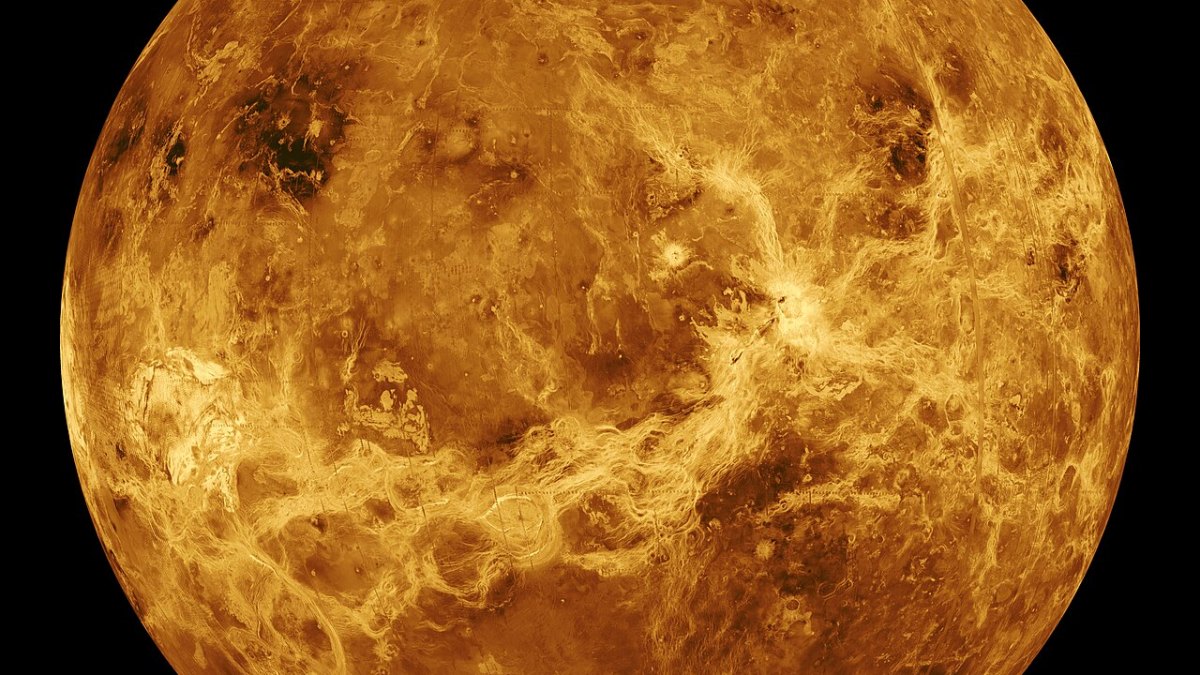
Venus, the second planet from the sun, has a day that lasts longer than its year. It takes 243 Earth days for Venus to complete a single rotation on its axis. In contrast, Venus orbits the sun in just 225 Earth days. This unusual rotation period contrasts with most other planets in our solar system, where a day is typically much shorter than a year. The slow rotation of Venus contributes to its extreme atmospheric conditions, with surface temperatures soaring to around 900 degrees Fahrenheit (475 degrees Celsius). Understanding this rotation pattern has significant implications for astronomers studying planetary dynamics and atmospheres.
Why Venus Spins So Slowly
The slow rotation of Venus is a phenomenon that scientists are still trying to fully understand. One theory suggests that Venus's thick atmosphere plays a crucial role in its slow spin. The dense atmosphere, composed mainly of carbon dioxide, creates a substantial amount of atmospheric pressure—around 92 times that of Earth's. This pressure, combined with the planet's close proximity to the sun, may have caused tidal forces that slowed its rotation over billions of years. Interestingly, Venus rotates in the opposite direction to most planets, a retrograde rotation, which adds another layer of complexity to its unique rotational characteristics.
Impact on Venusian Climate
Venus’s long day has significant effects on its climate and environmental conditions. The planet's slow rotation means that its surface experiences prolonged periods of daylight and darkness, each lasting about 121.5 Earth days. This contributes to the extreme temperatures and weather patterns observed on Venus. The thick clouds composed of sulfuric acid trap heat effectively, making Venus the hottest planet in our solar system, even hotter than Mercury, which is closer to the sun. The extended daylight also affects wind patterns, creating super-rotating winds that encircle the planet every four Earth days, moving much faster than the planet itself rotates.
Scientific Missions to Venus
The unique rotational and atmospheric characteristics of Venus have made it a target for numerous scientific missions. In recent years, NASA and the European Space Agency have announced plans to send multiple missions to Venus to study its atmosphere, surface, and geological history. The DAVINCI+ mission by NASA aims to analyze the planet's atmosphere to understand its origins and evolution. Meanwhile, the ESA's EnVision mission will focus on mapping the surface and studying the geological processes. These missions are crucial for understanding not only Venus but also the dynamics of planetary systems beyond our own solar system, potentially offering insights into exoplanets with similar characteristics.
In conclusion, Venus presents a fascinating case study for astronomers and planetary scientists due to its peculiar rotational period, which is longer than its year. Understanding the reasons behind this slow rotation and its effects on the planet's climate is critical for comprehending planetary dynamics both within our solar system and beyond. As upcoming missions aim to unravel the mysteries of Venus, they promise to shed light on the complex interactions between a planet's rotation, atmosphere, and climate.
- Venus has a retrograde rotation, making it spin in the opposite direction to most planets.
- The atmospheric pressure on Venus is about 92 times that of Earth, contributing to its slow rotation.
- Super-rotating winds on Venus move at speeds of up to 224 miles per hour (360 kilometers per hour).
- Venus's surface temperature can reach up to 900 degrees Fahrenheit (475 degrees Celsius).
- NASA and ESA's upcoming missions will explore Venus’s atmosphere and geological features.
💬 Discussion (0)
Leave a Comment