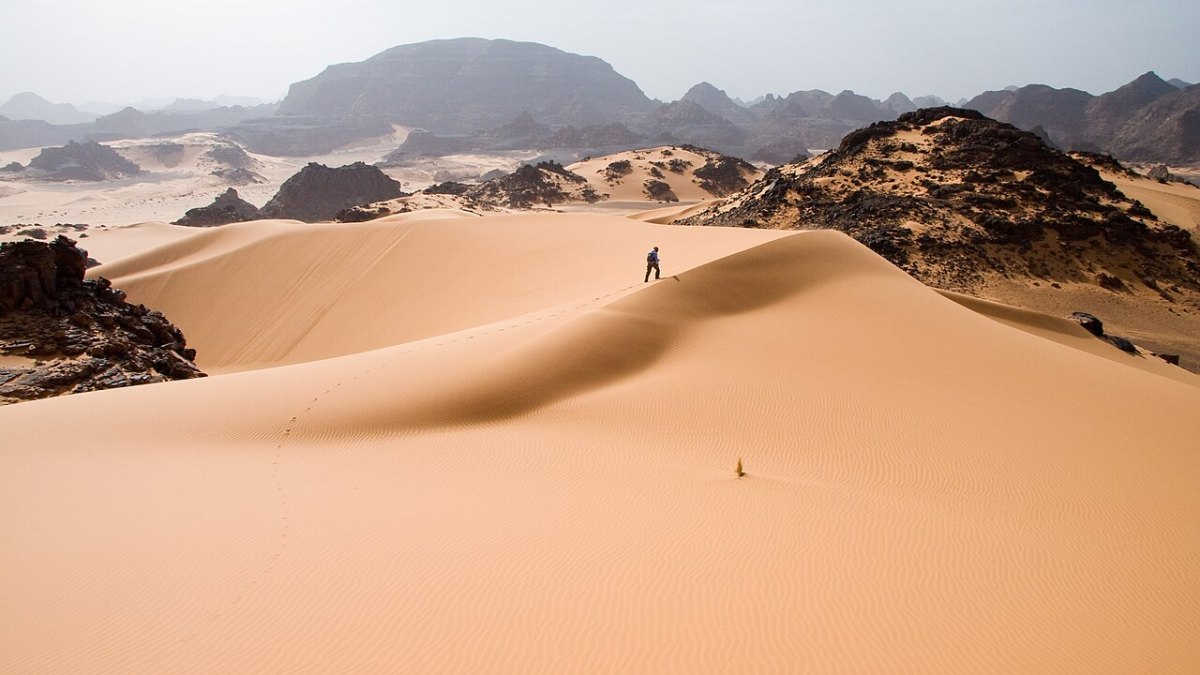
The Sahara Desert, the world's largest hot desert, has expanded by approximately 30% over the past century, according to a study published in 2018 by scientists from the University of Maryland. Covering parts of 11 countries, including Algeria, Chad, and Sudan, the desert's growth is linked to both natural climate cycles and human-induced climate change. This expansion has profound implications for the region's ecosystems and human populations, who are already grappling with scarce water resources and arable land. The study, which analyzed rainfall data from 1920 to 2013, found significant desertification trends that pose urgent environmental challenges.
Climate Change and Natural Cycles
The expansion of the Sahara is driven by a combination of anthropogenic climate change and natural climate cycles, such as the Atlantic Multidecadal Oscillation (AMO). The AMO, which shifts every 20 to 40 years, influences sea surface temperatures and, consequently, rainfall patterns in the Sahel region bordering the Sahara. During warm phases, the AMO can lead to reduced precipitation, exacerbating desertification. However, human activities, including greenhouse gas emissions, have intensified these natural cycles. According to the study, approximately two-thirds of the desert's expansion is attributable to climate change, underscoring the critical role of human influence in this environmental transformation.
Impact on Local Communities and Ecosystems
The expansion of the Sahara Desert has significant repercussions for local communities and ecosystems. As the desert encroaches on the Sahel, it reduces the availability of arable land and water resources, which are vital for agriculture and livestock. This shift threatens food security and livelihoods for millions of people living in the region. Moreover, the encroachment alters local biodiversity, pushing species to migrate or face extinction. The United Nations estimates that desertification affects over 250 million people globally, with the Sahel being one of the most impacted regions. The pressure on resources also exacerbates social tensions and can contribute to conflict over land and water.
Efforts to Mitigate Desertification
In response to the Sahara's expansion, various initiatives have been implemented to combat desertification. The African Union's Great Green Wall project aims to plant a 7,000-kilometer line of trees across the Sahel to slow desert encroachment and restore degraded lands. Launched in 2007, the project has seen over 20 million hectares of land restored and aims to create 10 million jobs. However, challenges remain, including funding and political instability in the region. International efforts, such as the United Nations Convention to Combat Desertification (UNCCD), also work towards global solutions. These initiatives highlight the need for coordinated action to address the environmental and socioeconomic impacts of desertification.
The Sahara's rapid expansion over the past century serves as a stark reminder of the urgent need for global environmental action. Addressing the root causes of desertification requires collaboration among nations, investment in sustainable practices, and a commitment to reducing greenhouse gas emissions. As the desert continues to grow, the stakes for affected communities and ecosystems become ever higher, necessitating immediate and sustained intervention.
- The Sahara Desert covers approximately 9.2 million square kilometers.
- Rainfall in the Sahel region has decreased by up to 40% in certain areas.
- Over 100 million people live in the areas surrounding the Sahara.
- The Great Green Wall project involves 11 African countries.
- Desertification affects about 46% of Africa's land area.
💬 Discussion (0)
Leave a Comment