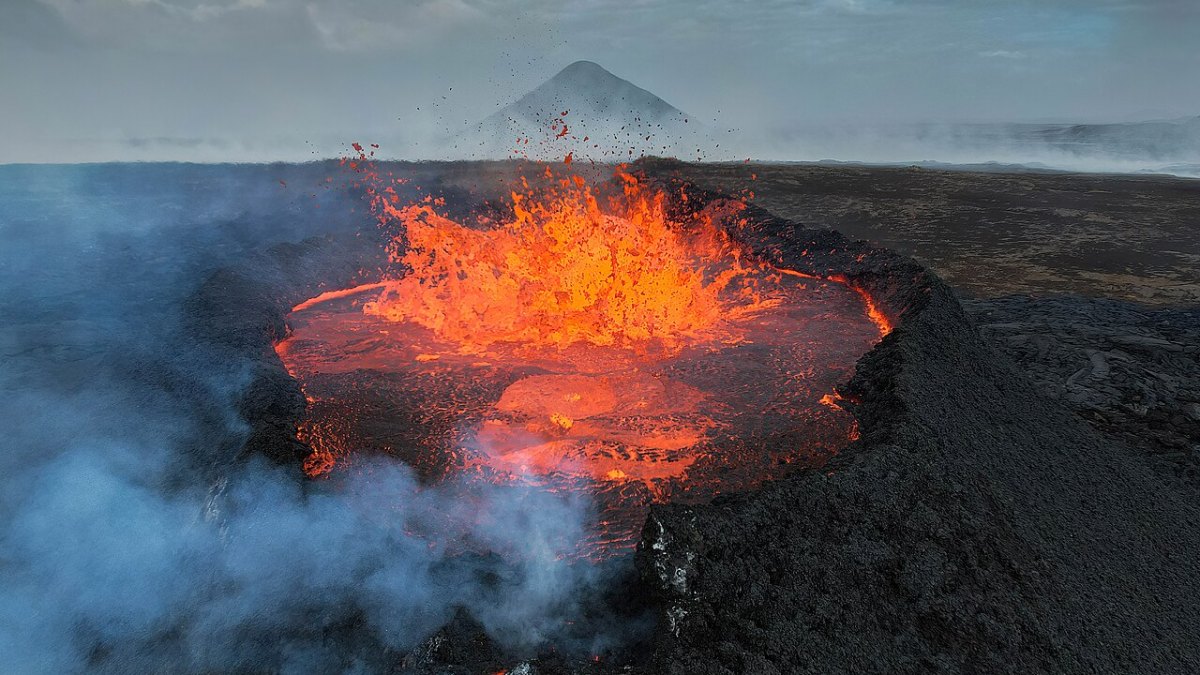
In a stunning display of nature's power, the Fagradalsfjall volcano in Iceland erupted continuously for over six months, beginning on March 19, 2021, and concluding in late September. This prolonged activity marked the longest eruption in Iceland in over 50 years. Located on the Reykjanes Peninsula, the eruption site became a focal point for scientists and tourists alike, eager to witness the birth of new landscapes. The eruption spewed lava that covered an area of approximately 4.6 square kilometers, with flows reaching up to 1.5 kilometers in length. The event captivated global audiences, drawing nearly 300,000 visitors keen to see the fiery spectacle firsthand.
Geological Significance
The eruption of Fagradalsfjall holds immense geological significance, as it occurred in an area that had been dormant for nearly 800 years. The Reykjanes Peninsula is part of the Mid-Atlantic Ridge, where the Eurasian and North American tectonic plates meet. This volcanic activity is attributed to magma accumulation beneath the surface, resulting in a fissure eruption. Unlike explosive eruptions, fissure eruptions produce lava flows that create new landforms over time. The lava emitted during the eruption was primarily basaltic, characterized by low viscosity, which allowed it to flow easily and shape the landscape. This event provided scientists with a rare opportunity to study geological processes in real-time.
Impacts on the Environment
The eruption significantly altered the surrounding environment. The new lava fields transformed the topography, creating valleys and hills where there were none before. The gases released during the eruption, including sulfur dioxide, impacted air quality, with concentrations occasionally exceeding safe limits. However, Iceland's low population density and prevailing wind patterns mitigated potential health risks. The eruption also affected local flora and fauna, initially damaging habitats. Over time, new ecosystems are expected to emerge, as volcanic soil is typically rich in minerals, promoting plant growth. The interaction between lava and water bodies created steam explosions, adding another dimension to this natural phenomenon.
Tourism and Economic Implications
Fagradalsfjall's prolonged eruption had notable implications for Iceland's tourism industry. The volcano became a major tourist attraction, with infrastructure quickly developed to accommodate the influx of visitors. Tour operators offered guided hikes to the eruption site, and local businesses experienced a surge in activity. The economic benefits extended beyond tourism, as the eruption also highlighted Iceland's potential for geothermal energy exploration. The country's commitment to sustainable energy solutions gained international attention, reinforcing its reputation as a leader in renewable energy. Despite challenges such as increased traffic and environmental concerns, the eruption's overall impact on Iceland's economy was positive.
As the Fagradalsfjall eruption ended, it left behind a transformed landscape and valuable scientific insights. This extraordinary geological event not only reshaped the physical terrain but also captured the world's imagination. The eruption demonstrated the Earth's dynamic nature and the continuous processes that shape our planet. While the lava has cooled, the legacy of this volcanic spectacle endures, offering lessons in resilience and adaptation. Iceland continues to monitor volcanic activity closely, prepared for future eruptions that may further alter its unique landscape.
- The Fagradalsfjall eruption covered an area of 4.6 square kilometers.
- Nearly 300,000 tourists visited the eruption site during its six-month duration.
- Magma accumulation beneath the surface triggered the fissure eruption.
- Lava flows reached lengths of up to 1.5 kilometers.
- Sulfur dioxide emissions occasionally exceeded safe air quality limits.
💬 Discussion (0)
Leave a Comment