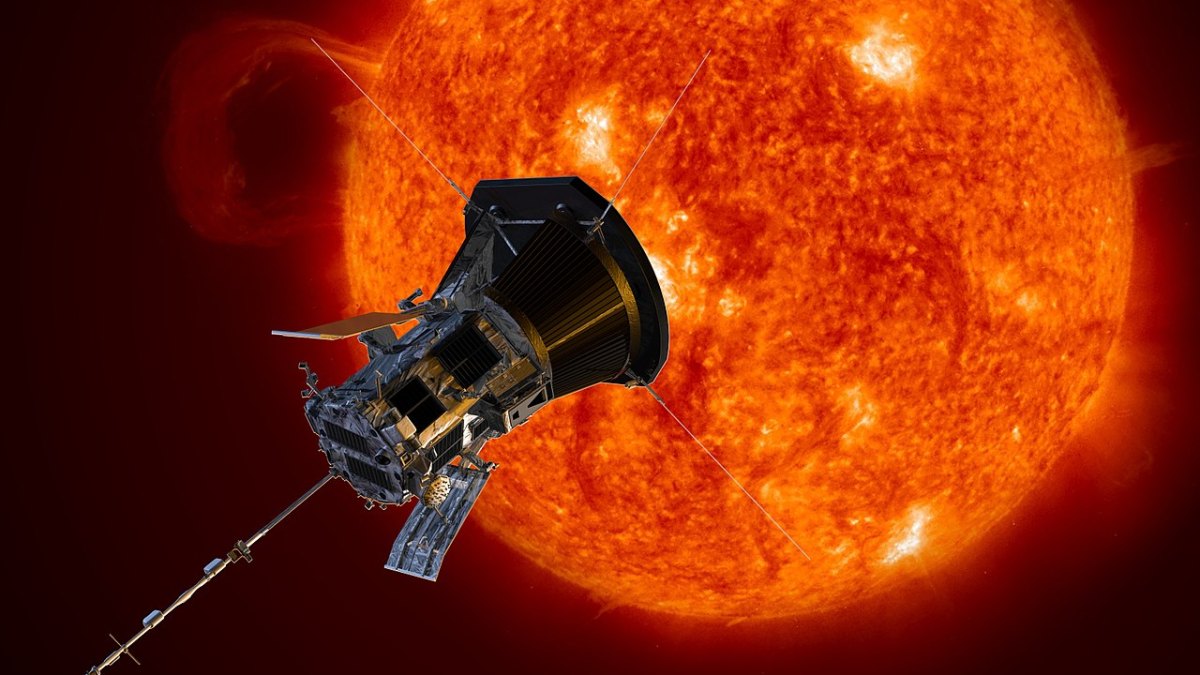
The Parker Solar Probe, launched by NASA on August 12, 2018, has officially become the fastest human-made object in history. On its tenth close approach to the Sun, the probe reached an astonishing speed of 244,255 kilometers per hour. This milestone not only marks a significant achievement in space exploration but also underlines the technological advancements that make such feats possible. The probe's high velocity is essential for its mission objectives, allowing it to gather valuable data from the Sun's outer atmosphere, or corona, and help scientists understand solar phenomena such as solar flares and coronal mass ejections.
Design and Mission Objectives
The Parker Solar Probe is named after Dr. Eugene Parker, who proposed the existence of solar wind in 1958. The spacecraft is equipped with a suite of scientific instruments designed to measure the electric and magnetic fields, plasma waves, and energetic particles in the solar environment. Weighing approximately 685 kilograms, the probe must withstand extreme temperatures that exceed 1,400 degrees Celsius as it travels through the Sun's corona. Its mission is to trace the flow of energy and understand the heating of the solar corona, and explore what accelerates the solar wind and solar energetic particles, providing insights into space weather that affects Earth.
Record-Breaking Speed and Its Implications
The Parker Solar Probe's record speed was achieved due to its unique trajectory, which involves a series of gravity assists from Venus. These maneuvers allow the spacecraft to gradually decrease its orbital perihelion, or closest point to the Sun, thereby increasing its velocity. This rapid speed is crucial as it enables the probe to complete a close approach, or perihelion, in just a matter of hours, minimizing the time spent in the most intense heat and radiation. The data collected during these high-speed passes will help scientists better predict solar activity and its potential impact on technologies on Earth, such as satellites and power grids.
Future of Solar Exploration
As the Parker Solar Probe continues its mission, it is expected to make a total of 24 orbits around the Sun by 2025. Each orbit will bring it closer to the Sun, with its closest approach planned at just 6.2 million kilometers from the solar surface. This unprecedented proximity will allow the probe to collect data that has never been possible before, potentially revolutionizing our understanding of the Sun. The mission's findings could lead to advancements in forecasting solar storms and mitigating their effects on Earth. The success of the Parker Solar Probe also paves the way for future missions aiming to study the Sun more closely, further pushing the boundaries of human space exploration.
- The Parker Solar Probe launched on August 12, 2018, aboard a Delta IV Heavy rocket.
- The mission aims to complete 24 orbits around the Sun by the year 2025.
- The probe's closest planned approach to the Sun is just 6.2 million kilometers from the surface.
- The spacecraft weighs approximately 685 kilograms and is equipped with advanced scientific instruments.
- It uses gravity assists from Venus to increase speed and decrease orbital perihelion.
As we continue to explore the vastness of space, milestones like the Parker Solar Probe's record speed highlight the incredible achievements of human ingenuity. The data collected by the probe will not only enhance our understanding of solar dynamics but also improve our ability to protect crucial technological infrastructures on Earth from solar-related disruptions. The mission represents a significant step forward in our quest to unlock the mysteries of the universe and underscores the importance of continued investment in space exploration.
💬 Discussion (0)
Leave a Comment