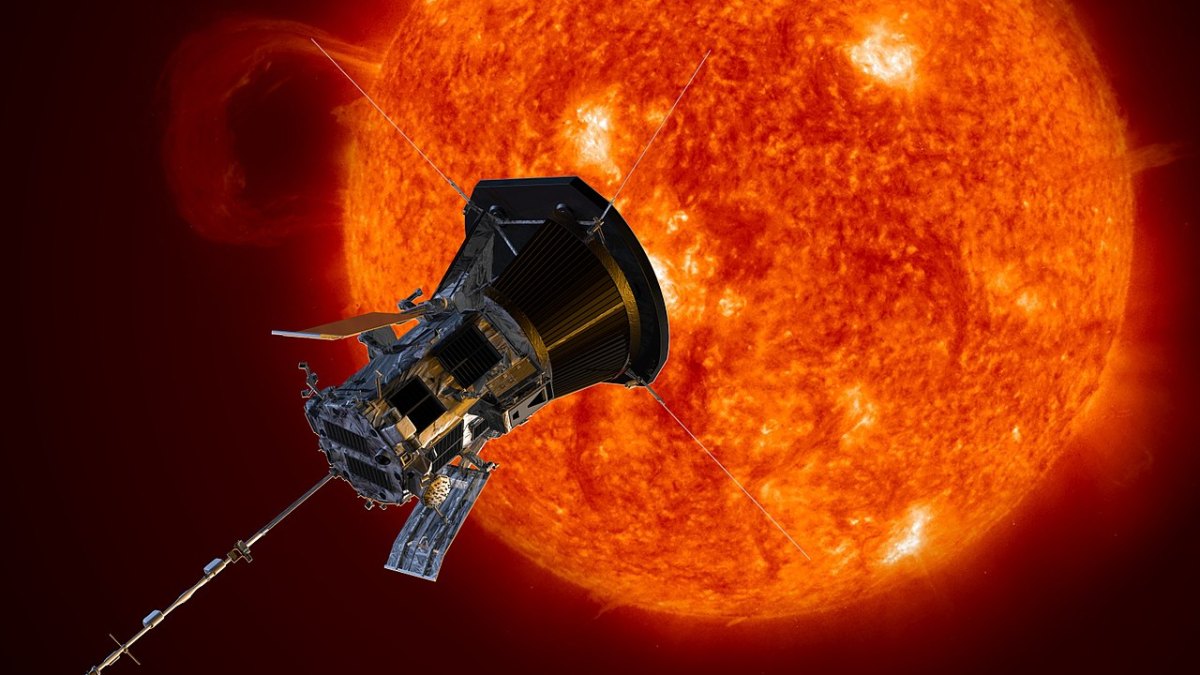
The Parker Solar Probe, a revolutionary mission launched by NASA, has set an astonishing record by becoming the fastest human-made object. Achieving speeds of up to 430,000 miles per hour (approximately 692,000 kilometers per hour), the spacecraft is on a mission to explore the Sun's outer corona. Launched on August 12, 2018, the probe's aim is to provide unprecedented data about the Sun's atmosphere, magnetic fields, and solar winds.
Mission Objectives
The primary objective of the Parker Solar Probe is to better understand the dynamics of the Sun's outer atmosphere. By venturing closer to the Sun than any previous spacecraft, the probe aims to unravel the mysteries of solar winds and why the Sun's corona is significantly hotter than its surface. The spacecraft carries a suite of instruments designed to measure electric and magnetic fields, plasma waves, and high-energy particles.
Record-Breaking Speed
The Parker Solar Probe achieved its record-breaking speed during its closest approach to the Sun, known as perihelion. This occurs when the spacecraft's orbit brings it within 3.83 million miles (about 6.16 million kilometers) of the Sun's surface. The intense gravitational pull of the Sun accelerates the probe to its peak speed, allowing it to gather valuable scientific data while enduring extreme temperatures.
Technological Innovations
The probe's success is attributed to several technological innovations that ensure its survival in the harsh space environment. A cutting-edge heat shield, known as the Thermal Protection System (TPS), protects the spacecraft from temperatures reaching nearly 2,500 degrees Fahrenheit (about 1,377 degrees Celsius). This advanced shield allows the instruments to operate at a relatively cool and safe temperature. Additionally, solar arrays that power the probe are engineered to retract and extend as needed to regulate their exposure to the Sun.
Future Prospects
As the Parker Solar Probe continues its mission, it is expected to complete a total of 24 orbits around the Sun by the end of 2025. Each orbit brings the probe closer, providing further opportunities to gather detailed data. The insights gained from this mission are anticipated to significantly enhance our understanding of solar phenomena, potentially impacting forecasts of space weather events that affect Earth. The successful operation of the Parker Solar Probe not only demonstrates the potential for human-made objects to reach unparalleled speeds but also underscores our ability to explore the most extreme environments in our solar system.
💬 Discussion (0)
Leave a Comment