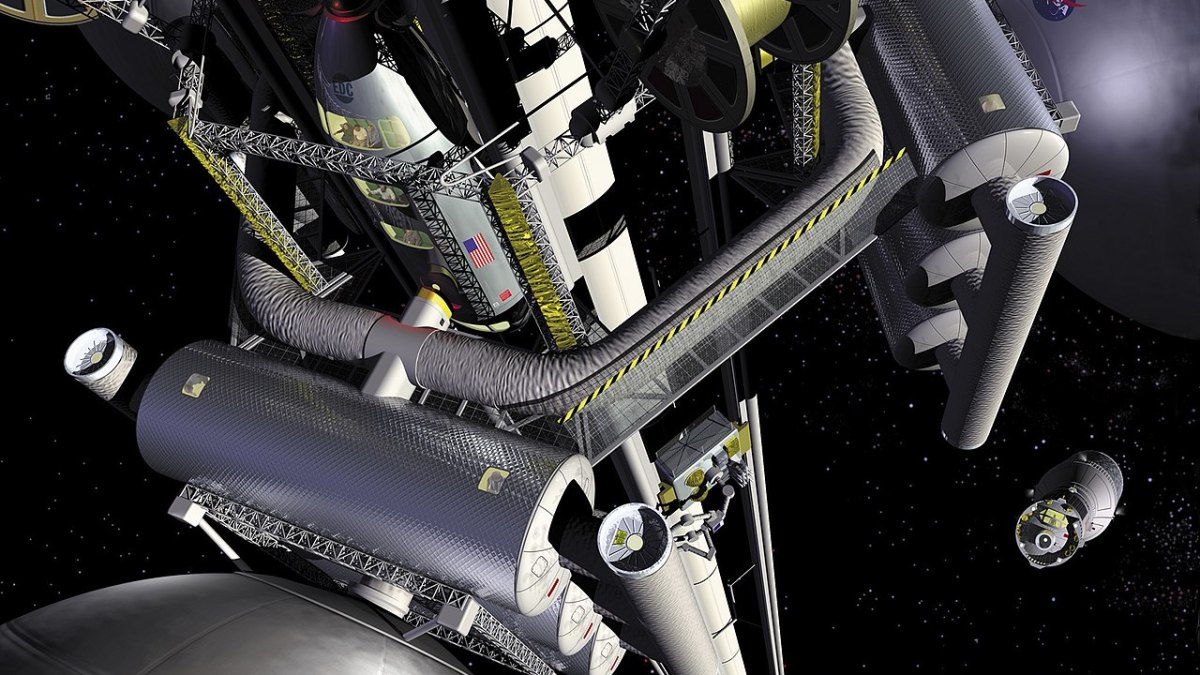
Imagine a structure stretching 100,000 kilometers into the sky, redefining the boundaries of engineering and space travel. This is the vision of modern space elevator designs, which propose a cable extending from the Earth's surface into space, anchored by a massive counterweight. The concept, once a staple of science fiction, is now being seriously considered due to advances in material sciences and engineering. With such a space elevator, the cost of transporting goods and humans to orbit could be reduced by up to 90%, making space more accessible than ever before. According to recent studies, this ambitious project could revolutionize the way we think about space travel.
Advancements in Material Science
The feasibility of space elevators has long been hindered by the lack of suitable materials. However, recent advancements in carbon nanotube technology have brought this dream closer to reality. Carbon nanotubes are incredibly lightweight yet stronger than steel, making them ideal for constructing the cable needed for a space elevator. Researchers at the University of Tokyo have made significant strides in producing long, continuous strands of carbon nanotubes, which could potentially withstand the immense tension required for a 100,000 km structure. This breakthrough could pave the way for the construction of the first viable space elevator within the next few decades, according to a 2023 report by the Japan Aerospace Exploration Agency.
Economic and Environmental Impact
Building a space elevator could have profound economic and environmental impacts. The current cost of launching objects into space is approximately $10,000 per kilogram. A space elevator could reduce this cost to just a few hundred dollars per kilogram, as estimated by NASA's Advanced Concepts Office. This reduction would make space accessible for commercial, scientific, and even personal travel, opening up new markets and opportunities. Furthermore, space elevators would significantly decrease the environmental footprint associated with rocket launches, which currently contribute to atmospheric pollution. By providing a more sustainable and cost-effective means of reaching space, these structures could play a crucial role in future space exploration and exploitation.
Challenges and Future Prospects
Despite the exciting potential, there are significant challenges to overcome before space elevators become a reality. One major issue is the risk of collisions with satellites and space debris, which could damage the elevator cable. Solutions such as active debris removal and advanced tracking systems are being developed to address this concern. Additionally, political and legal frameworks need to be established for the construction and operation of such international infrastructure. As of 2023, international space agencies and private companies are collaborating to tackle these challenges. If successful, the first operational space elevator could be constructed by 2050, revolutionizing human access to space and potentially enabling new frontiers in space colonization.
- Carbon nanotubes are stronger than steel and essential for space elevator cables.
- A space elevator could reduce launch costs from $10,000 to a few hundred dollars per kilogram.
- Space elevators could be operational by 2050, according to current projections.
The dream of space elevators is gradually transitioning from fiction to reality, driven by advancements in materials and engineering. While challenges remain, the benefits of reduced costs and environmental impact make this an enticing prospect for the future of space exploration. As research and development continue, we are likely to see significant progress towards constructing these monumental structures, potentially altering the landscape of space travel forever.
💬 Discussion (0)
Leave a Comment