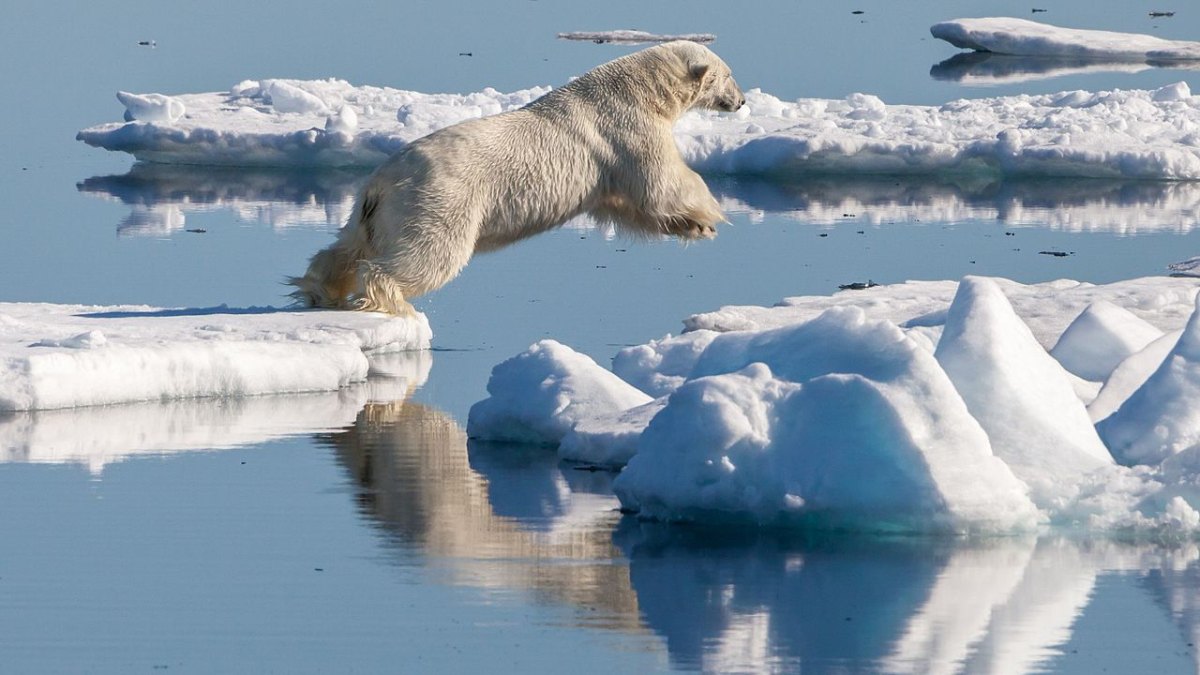
A polar bear has made an extraordinary swim of 354 kilometers across the Arctic waters, setting a new record that underscores the harsh realities of climate change. This journey, which took place over nine days, was tracked by scientists who equipped the female polar bear with a GPS collar. The bear's trek is one of the longest ever recorded, demonstrating the extreme measures these animals must take to find food and suitable ice habitats as global warming continues to melt the Arctic ice. The bear's journey started in the Beaufort Sea and ended in the Chukchi Sea, highlighting the expansive distances polar bears now travel due to shrinking ice coverage.
The Journey's Details
The 354-kilometer swim was tracked meticulously by researchers from the University of Alberta, who have been studying polar bear movements for over a decade. According to Dr. Andrew Derocher, the lead researcher, the bear averaged a swimming speed of roughly 2 kilometers per hour. The bear's swim was not continuous; she took several breaks on small, floating ice chunks that provided temporary rest. The journey's duration was approximately nine days, during which the bear faced harsh weather conditions and frigid water temperatures. This trek is a testament to the bear's resilience and the increasing challenges posed by the loss of sea ice due to global warming.
Impact of Climate Change
As the Arctic warms at twice the global average rate, sea ice is retreating, forcing polar bears to travel longer distances in search of food and stable habitat. This extended swim highlights the dire situation for polar bears, who rely on sea ice as platforms for hunting seals, their primary food source. A study published in 'Nature Climate Change' indicates that the average ice-free period in the Arctic has increased by about 20 days per decade since the late 1970s. This loss of ice not only affects polar bears' hunting and resting patterns but also increases the energy expenditure required for survival, leading to malnutrition and decreased cub survival rates.
Conservation Efforts
Efforts to mitigate the effects of climate change on polar bears are ongoing. Organizations such as the World Wildlife Fund (WWF) and Polar Bears International are advocating for stronger climate policies and increased conservation measures. In 2023, the WWF reported a decline in the polar bear population across several regions, estimating only 22,000 to 31,000 individuals remaining worldwide. Conservationists emphasize the need for international cooperation to reduce greenhouse gas emissions and protect critical habitats. Innovative solutions, such as creating artificial ice platforms and enhancing monitoring technologies, are being explored to support polar bear survival in a changing Arctic.
The remarkable 354-kilometer swim by this polar bear is not just a testament to the individual animal's endurance but also a stark reminder of the urgent need for global action on climate change. As the Arctic continues to warm, the survival of polar bears and other Arctic species hangs in the balance. This record-breaking journey should serve as a wake-up call, prompting us to protect these majestic creatures and their habitat before it's too late.
- Polar bear populations are primarily found in five countries: the United States, Canada, Russia, Greenland, and Norway.
- The Arctic region has experienced a temperature increase of approximately 3 degrees Celsius since the 1970s.
- Polar bears can swim for several hours at a time over long distances, but such extensive swims are energetically costly.
- Sea ice loss is projected to lead to a decline in two-thirds of the current polar bear population by 2050.
- Conservation efforts include tracking polar bear movements using satellite collars and drones.
💬 Discussion (0)
Leave a Comment