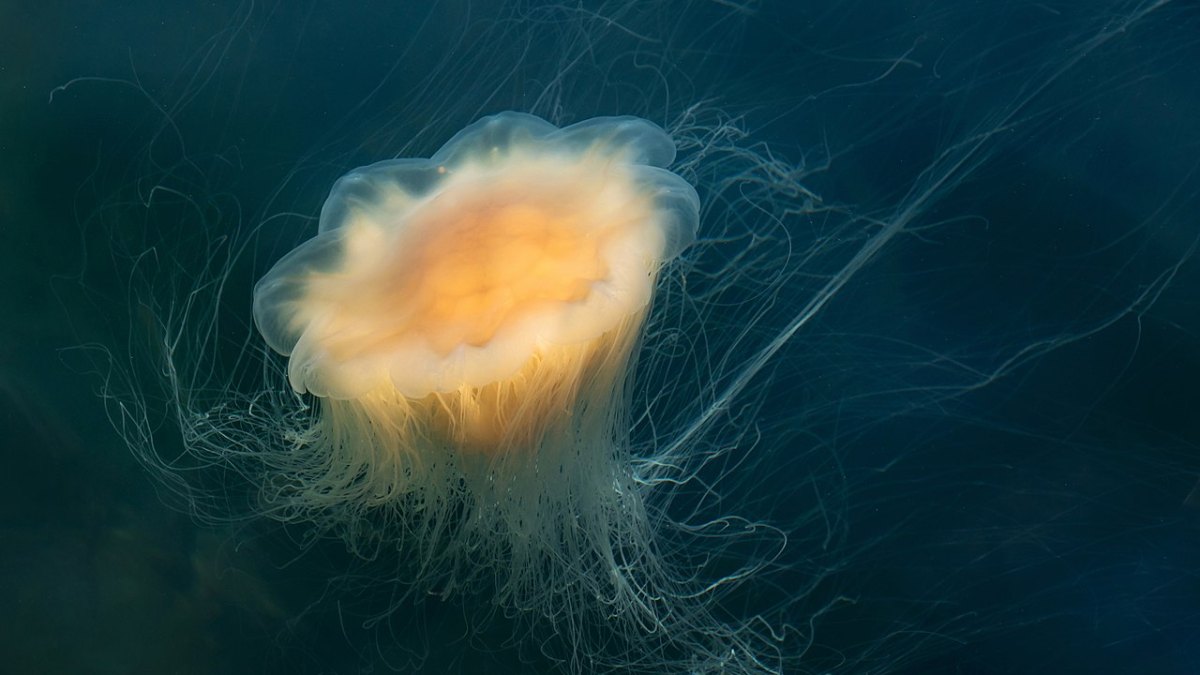
The lion's mane jellyfish (Cyanea capillata) is a marine marvel, with its bell reaching diameters of up to 6 feet, marking it as one of the largest jellyfish species known. Found predominantly in the cold waters of the Arctic, North Atlantic, and North Pacific Oceans, this jellyfish is a striking sight for any diver or marine enthusiast. Its tentacles can extend over 100 feet, making them longer than a blue whale, which is the largest animal on Earth. Such immense dimensions not only contribute to its awe-inspiring appearance but also play a crucial role in its survival and predatory capabilities.
Physical Characteristics and Size
The lion's mane jellyfish is not just about its impressive size; its physical characteristics are equally fascinating. The jellyfish's bell, often compared to a lion's mane, is typically a deep orange or red hue, though colors can vary widely among individuals. This pigmentation helps it blend into the ocean's depths, providing camouflage from predators. Each jellyfish is equipped with eight groups of tentacles, with each group containing 70 to 150 tentacles. These tentacles are armed with nematocysts, which deliver stings potent enough to paralyze or kill small fish and invertebrates. In terms of weight, a full-grown lion's mane jellyfish can weigh over 200 pounds.
Habitat and Distribution
These jellyfish predominantly inhabit the cooler waters of the Northern Hemisphere, ranging from the Arctic to the temperate zones of the North Atlantic and North Pacific Oceans. They are especially prevalent near the coasts of the United Kingdom, the eastern seaboard of the United States, and parts of Canada. Seasonal migrations are common, with lion's mane jellyfish moving to deeper waters during the summer months to avoid warmer surface temperatures. This species is also known to drift into more southern waters occasionally, carried by ocean currents, though such occurrences are less common.
Role in the Ecosystem
The lion's mane jellyfish plays a critical role in its marine ecosystem. As both predator and prey, it maintains the balance in the food web. It feeds on small fish, zooplankton, and other jellyfish species, utilizing its long tentacles to capture prey. In turn, these jellyfish are preyed upon by larger marine animals such as sea turtles, certain species of fish, and seabirds. Their presence indicates a healthy marine environment, as they thrive in clean, cold waters. Interestingly, some juvenile fish species seek refuge among the jellyfish's tentacles, gaining protection from predators while being immune to the jellyfish's stings.
- The longest recorded tentacles of a lion's mane jellyfish stretched over 120 feet, rivaling the length of many sea creatures.
- Lion's mane jellyfish are bioluminescent, emitting a faint, ghostly glow in the dark ocean waters.
- These jellyfish can reproduce both sexually and asexually, allowing them to adapt to various environmental conditions.
In closing, the lion's mane jellyfish is a testament to the diversity and wonder of marine life. Its sheer size, vibrant colors, and role in the ecosystem make it a subject of intrigue for scientists and nature enthusiasts alike. Understanding its behavior and habitat helps underscore the importance of conserving marine environments, ensuring these magnificent creatures continue to thrive in our oceans for generations to come.
💬 Discussion (0)
Leave a Comment